
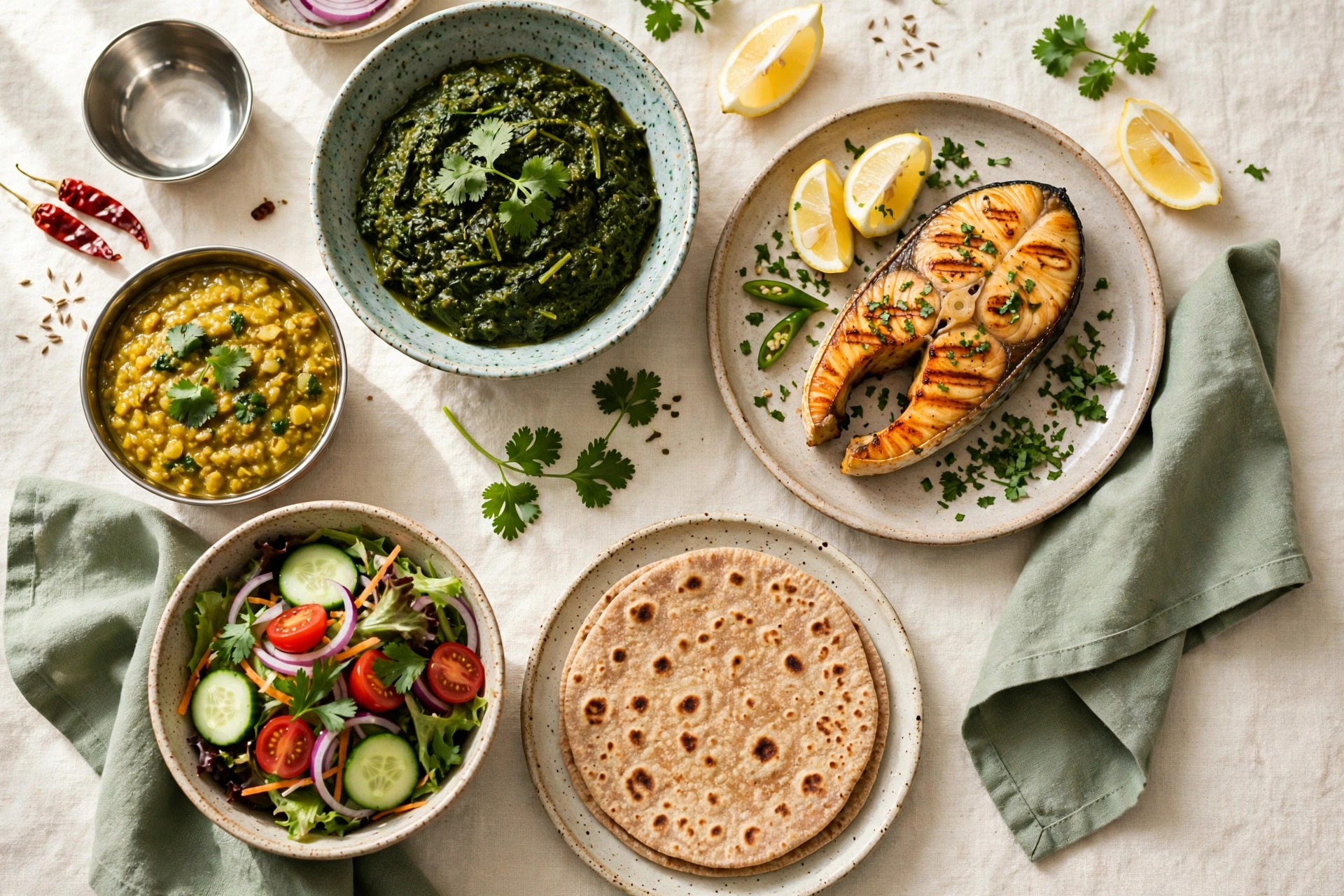
A diabetes diagnosis does not mean boring food. Many patients think they must give up everything tasty. That is not true. Diabetic-friendly Pakistani recipes use the same spices and flavors you love. They just balance carbs, protein and fat better.
The goal is stable blood sugar. No big spikes after meals. No crashes before the next one. These recipes and cooking ideas help you get there, one meal at a time.
The Plate Method: Your Simplest Tool
Forget complicated charts. Use the plate method at every meal. Fill half your plate with vegetables. Fill one quarter with protein. Fill the last quarter with roti or rice. This one habit controls portions without counting calories.
Add a small bowl of dahi on the side. Dahi adds protein and slows digestion. Drink water with your meal, not sweet drinks. This method works for lunch and dinner, at home or at dawat.
Breakfast Ideas for Stable Mornings
Mornings set your blood sugar tone for the day. A sweet, heavy breakfast causes a spike by 10 am. A balanced one keeps you steady till lunch.
Try vegetable omelet with one whole wheat roti. Add tomatoes, onions and green chilies. Or try dahi with a small portion of oats and a few nuts. Besan cheela (gram flour pancake) with vegetables is another good option. It is high in protein and fiber.
Avoid sugary parathas, halwa puri and sweet cereals. If you love chai, take it with less sugar or a sugar substitute. Never skip breakfast. Skipping leads to overeating at lunch.
Lunch: Roti, Rice and Smart Portions
Lunch is the main meal in most Pakistani homes. Keep it satisfying but balanced. Two small whole wheat rotis are fine for most people. If you eat rice, keep it to one small bowl, about one cup cooked.
Pair your carbs with protein and sabzi. Daal with palak, chana masala with salad, or grilled chicken with mixed vegetables all work well. Add a large salad portion. Raw vegetables add fiber and slow sugar absorption.
Cooking oil matters. Use one to two teaspoons per person per meal. Mustard oil and limited desi ghee are fine. Avoid reusing frying oil. It harms more than fresh oil.
Dinner: Light and Early
Dinner should be the lightest meal. Heavy late dinners keep blood sugar high through the night. Eat at least two to three hours before sleep.
Good dinner options: grilled fish with steamed vegetables, chicken shorba with one roti, or daal with a big salad. Soups work well too. A simple chicken and vegetable soup fills you up with few calories.
If you feel hungry later, take warm milk with a pinch of haldi. Avoid late-night snacks like biscuits, cake or leftover rice.
Snacks That Do Not Spike Sugar
Snacking is fine if you choose well. Roasted chana, a boiled egg or a small apple are safe choices. Cucumber, carrots and tomatoes with a little salt work too.
Avoid biscuits, nimko, mithai and bakery items as daily snacks. They are high in refined carbs and unhealthy fats. Save sweets for rare occasions and small portions.
Nuts are good but watch the quantity. A small handful of almonds or walnuts is enough. Nuts are healthy but calorie dense.
Cooking Swaps That Make a Big Difference
Small swaps add up. Use whole wheat flour instead of white flour. Choose brown rice or small portions of white rice. Steam or grill instead of deep frying.
Replace sugar in chai gradually. Reduce one spoon at a time. Your taste adjusts in two weeks. Use lemon, mint and green chilies freely. They add flavor without calories.
Make your own masalas when possible. Store-bought mixes sometimes add hidden sugar and salt. Fresh spices taste better and cost less.
Eating Out and at Dawats
Social meals are part of life. You do not need to skip them. Eat a light snack before going so you do not arrive starving. At the dawat, fill your plate once using the plate method.
Choose grilled items over fried ones. Take salad first. Drink water or diet drinks instead of regular cold drinks. For dessert, take two small spoons and stop. Enjoy the company more than the food.
Weekly Meal Prep Tips for Busy Families
Cooking fresh three times a day is hard. Prep once, eat well all week. Boil a batch of chana or lobia on Sunday. Store it in the fridge for quick lunches. Chop vegetables for two days at a time.
Make extra daal and freeze portions. Thaw one portion each morning. Keep boiled eggs ready for snacks. Wash and cut salad vegetables in advance. When healthy food is ready, you reach for it first.
Involve your family. Cook one meal for everyone with adjusted portions for you. Separate diet food creates stress. Shared meals with smart portions keep everyone happy.
Drinks: What to Choose
What you drink matters as much as what you eat. Water is always the best choice. Aim for 8 to 10 glasses daily. Green tea and black tea without sugar are fine too.
Avoid regular cold drinks, packaged juices and sweet lassi. One glass of cold drink can hold 8 to 10 spoons of sugar. That is more than a whole meal should contain. Diet drinks are better but water is best.
Fresh lemon water with a pinch of salt is a good summer drink. Buttermilk (lassi) made from low fat dahi without sugar also works. Keep milk portions moderate, one to two glasses a day.
A Note on Safety
Food is powerful, but it works with your medicine, not instead of it. Never stop or change your diabetes medicine without your doctor. Check your blood sugar as your doctor advises. If a new meal pattern causes lows, tell your doctor and your dietitian.
Dr Aqsa Atta builds diabetes meal plans around real Pakistani cooking. Plans fit your medicines, your reports and your kitchen. To get a personal plan, book a consultation on WhatsApp at https://wa.me/923355308500.
By Dr Aqsa Atta, AHPC Registered Dietitian